
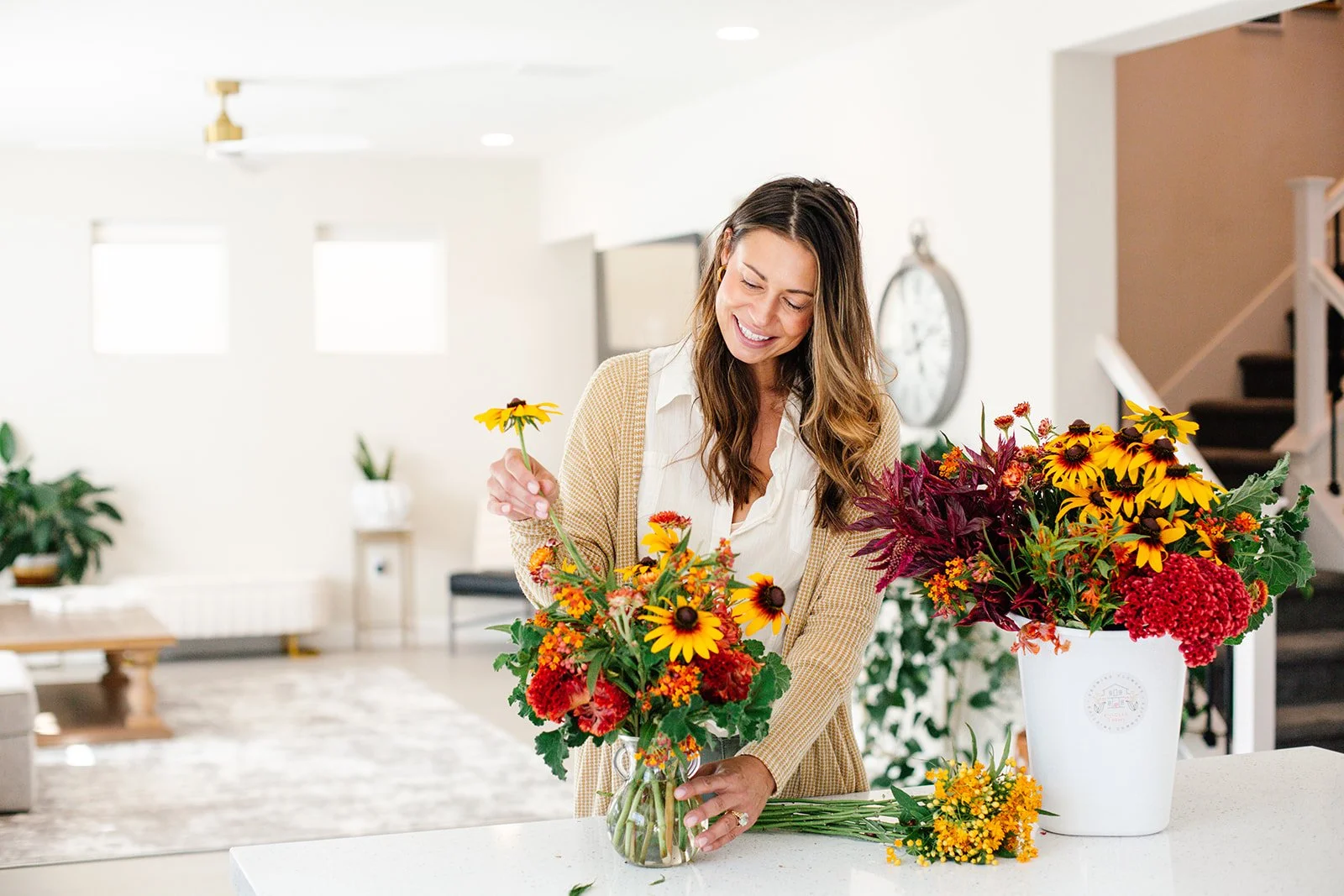
If floral arranging feels like something only pros can pull off, I have excellent news: It doesn't have to be that complicated.
Flowers are for everyone, and one of the easiest ways to approach the task is to think about arranging a vase the way you'd build a weeknight salad: by pulling together a few key ingredients to make something filling and satisfying. At Killdeer Farms, I call it the salad method.
The vase is the plate
If you get nothing else out of this, get this: Selecting the right vase is the key to successful arranging.
A small, wide-mouth vase (like a jar) is forgiving. A tall, cylindrical vase creates a tighter, more upright look. V-shaped vessels allow your flowers to splay outward. And if you're working with top-heavy stems like sunflowers, a heavy container keeps them from face-planting onto the counter.
And remember: The bigger the mouth, the more flowers you need. Start small.
build with four types of ingredients
1. Greenery forms your base
This is the lettuce in your salad. Do you prefer one variety or a mix? Foliage gives you shape and structure. Mint, bolted basil, eucalyptus, geranium, even leafy branches can work beautifully. I like about 30 percent of my arrangement to be greenery.
Don't let the foliage just peek out of the vase. You want it to burst forth, spill over and begin to cover the rim.
2. Focal flowers are the star
This is your protein, the main oomph on your plate. Focal flowers are what grab your eye first. Think sunflowers, hydrangeas, roses, lilies. Because these are also often the priciest flowers, you can choose just a few. Let them sit at slightly different heights rather than forming one perfect ring. Use bigger, darker, and heavier flowers lower in your vase to anchor the eye.
3. Secondary flowers play a supporting role
These are your main salad additions that complement the protein. Flowers like cosmos, alstroemeria, bolted dill, and button mums fill gaps, soften the look and make the whole thing feel intentional. These flowers should be a little less prominent than your focal flowers.
4. Croutons
You don't have to have them, but they're fun. In an arrangement, your finishing touches might come from wispy grasses, whimsical pods, or a few stems of fresh lavender. These are little elements that make you lean in and take notice. The finishing touch.
The shopping trick
If you want more design control, buy single-variety bunches instead of one mixed bouquet. Pick a bunch of greenery, one focal flower and one or two supporting flowers. Or, if you fall in love with a mixed bouquet at the farmers market and want to fill in the missing components at home, add a few elements from your own backyard.
Keep it simple
Sometimes the best recipe is no recipe at all. Twenty-five sunflowers in a big, heavy urn can be spectacular. The point is not to follow rules perfectly. It's to understand enough structure that you can break the rules on purpose.
If you want to take your skills to the next level, I wrote a beautiful digital workbook, The UnFlorist's Guide to Floral Design. It was created to help regular people make their flowers look good without turning it into a whole performance.
Happy flowering!
Related notes


How to pick a bouquet that won't die tomorrow, and how to keep it happy once it's home.