
Lavender essential oil is made through a process called steam distillation. Steam passes through fresh or dried lavender buds, picking up the plant's aromatic compounds along the way. The vapor travels through a condenser, where it cools back into liquid. The result separates into two parts: essential oil, which floats to the top, and hydrosol, the fragrant water that's collected beneath it.
That's the science. Here's how it happens at Killdeer Farms, where about 250 Riverina Thomas lavender plants grow just a few steps from our front porch.
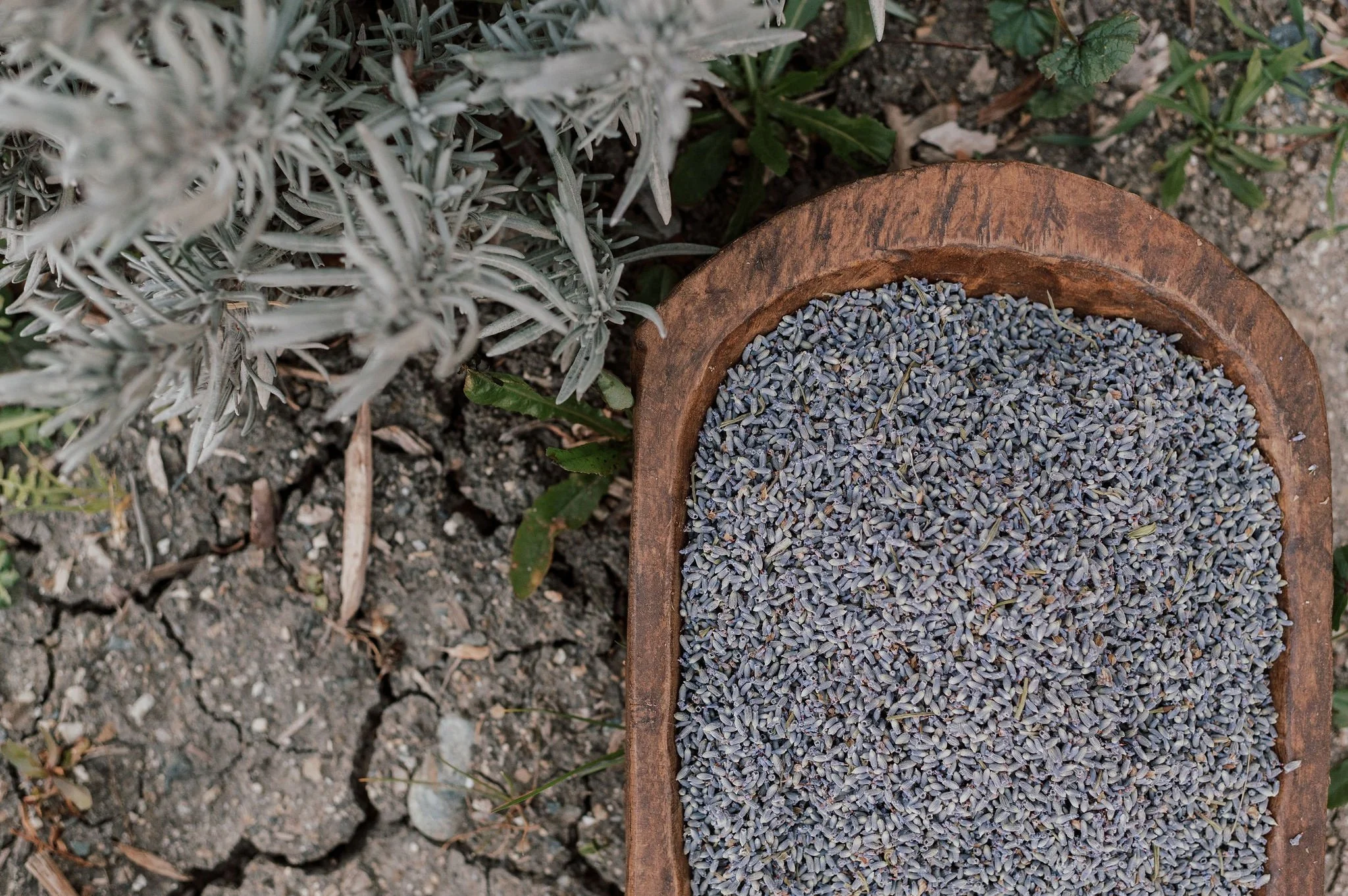
Photo: Anya McInroy
Harvest
Every June, lavender changes the rhythm of the farm.
We harvest by hand at peak bloom, when the flowers are fragrant and their essential oil is abundant. How do we know when the time is right? We listen to the bees.
At first, a few arrive to investigate the opening buds. A few days later, there are more. Then one morning, we open the front door and the entire farm is humming. The flowers have opened, and the bees have found the lavender buffet.
We harvest early in the morning, while the air is still cool and the bees are less active. Once the day warms, they're ready to get to work, and we get out of their way.
The freshly cut lavender is hung to dry before being loaded into our copper still. Water is heated in the belly of the still, producing steam that rises through the lavender buds above. As it passes through the plant material, the steam picks up the lavender's volatile aromatic compounds.
The fragrant vapor then travels into a condenser, where it cools and returns to liquid. What emerges is a mixture of two useful products: essential oil and hydrosol, the fragrant floral water we use to make our linen mist.
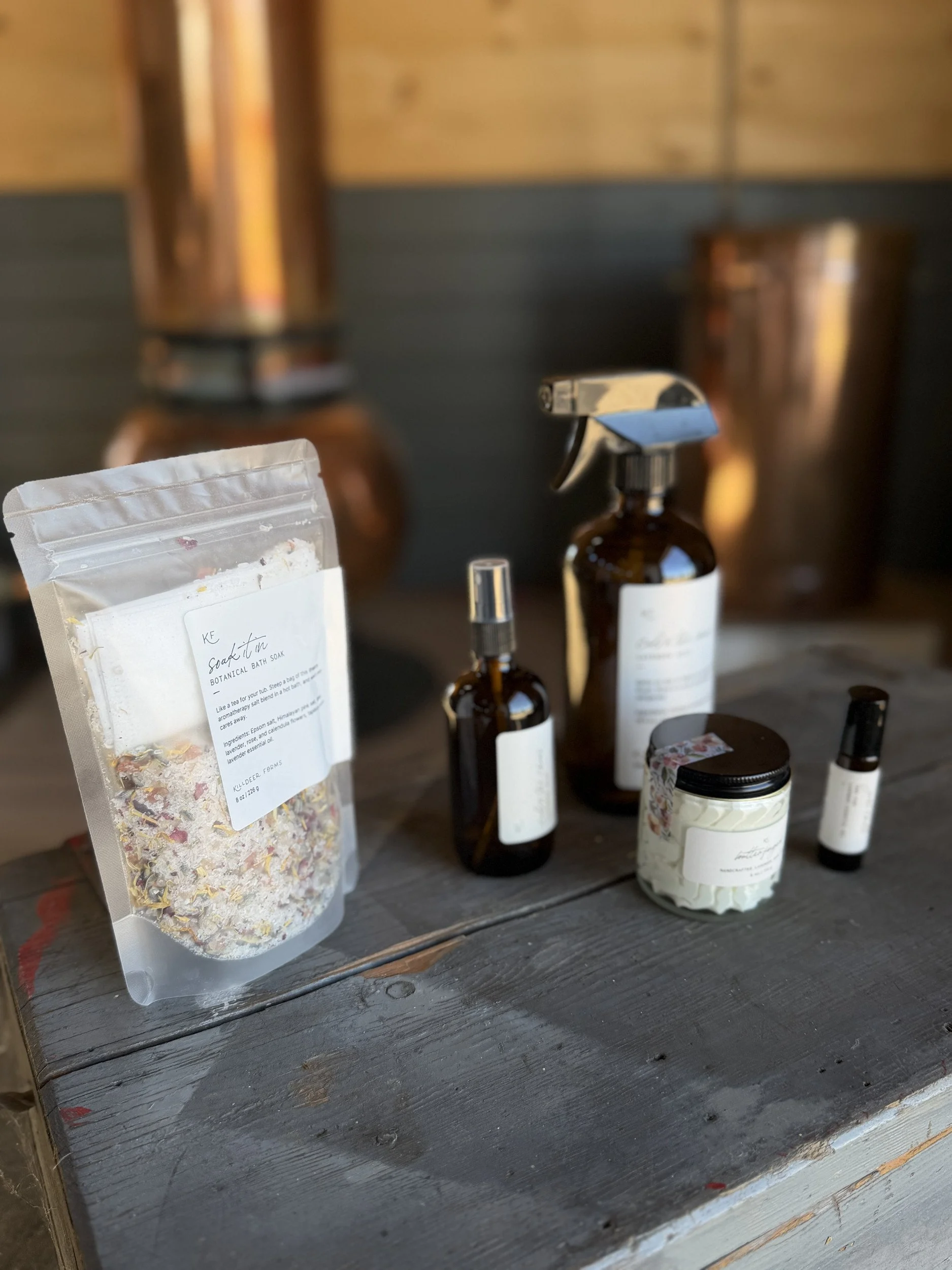
Separating oil and hydrosol
Because lavender essential oil is lighter than water, it separates and floats above the hydrosol. We let the two layers settle, then carefully separate and collect them using a separatory funnel, the kind of glassware you might remember from a science lab.
The essential oil is filtered and bottled by hand in our farmhouse kitchen.
Distillation is wonderfully inefficient in the way agriculture often is. A large amount of plant material produces a relatively small amount of essential oil. That's part of what makes it valuable. Each bottle represents months of sunshine and irrigation, a carefully timed harvest, pounds of lavender, heat, steam, and a fair amount of hands-on work.
The two products come from the same distillation, but they're not the same thing.
Essential oil is the small, concentrated layer that floats on top. It's the fragrant foundation of the lavender goods we make here.
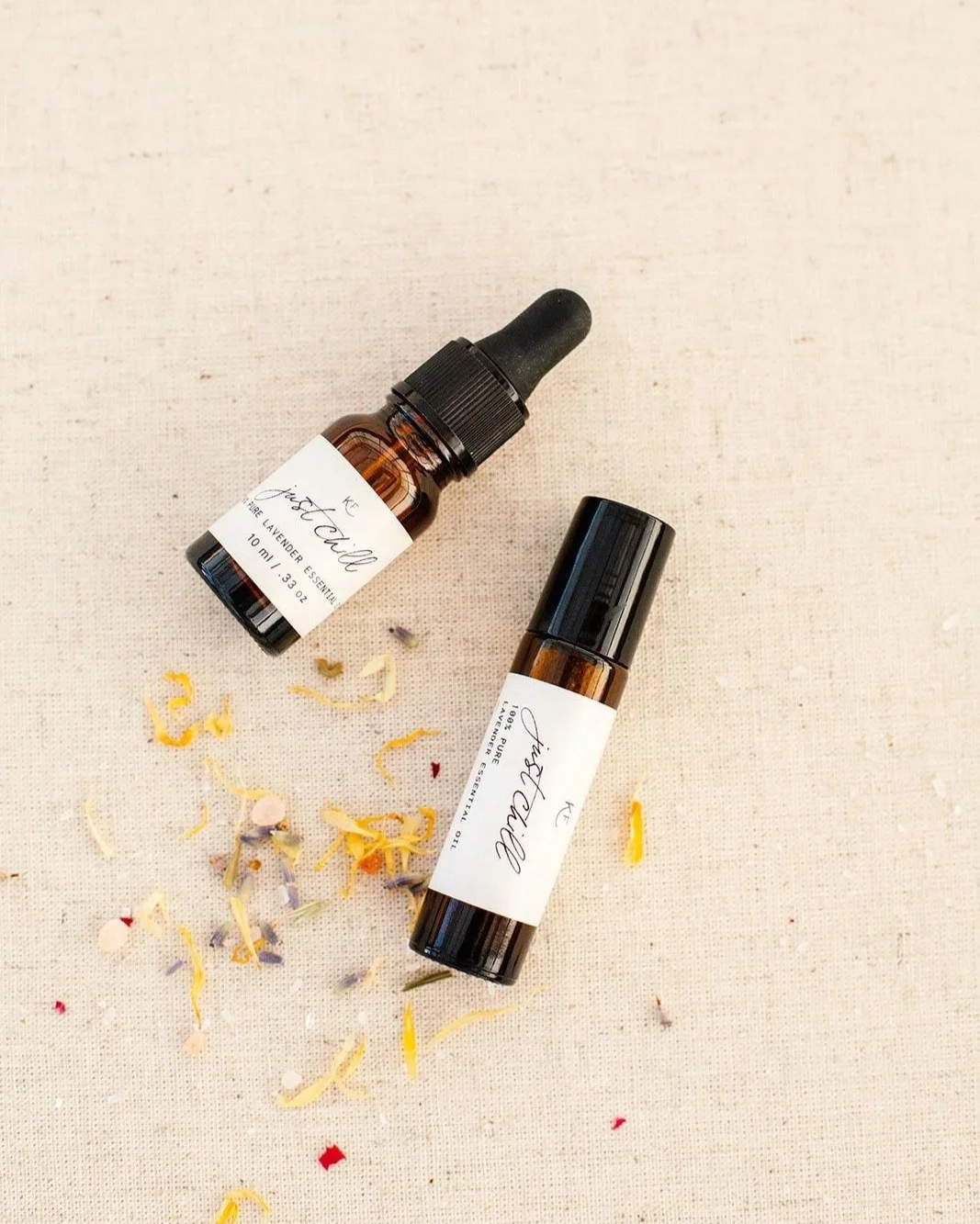
Our lavender essential oil in dropper and roller bottles.
Hydrosol is the much larger layer of fragrant water underneath. It carries a softer scent and can be used as a fragrant botanical water. We bottle it as a linen spray, though it's also a wonderful facial toner.
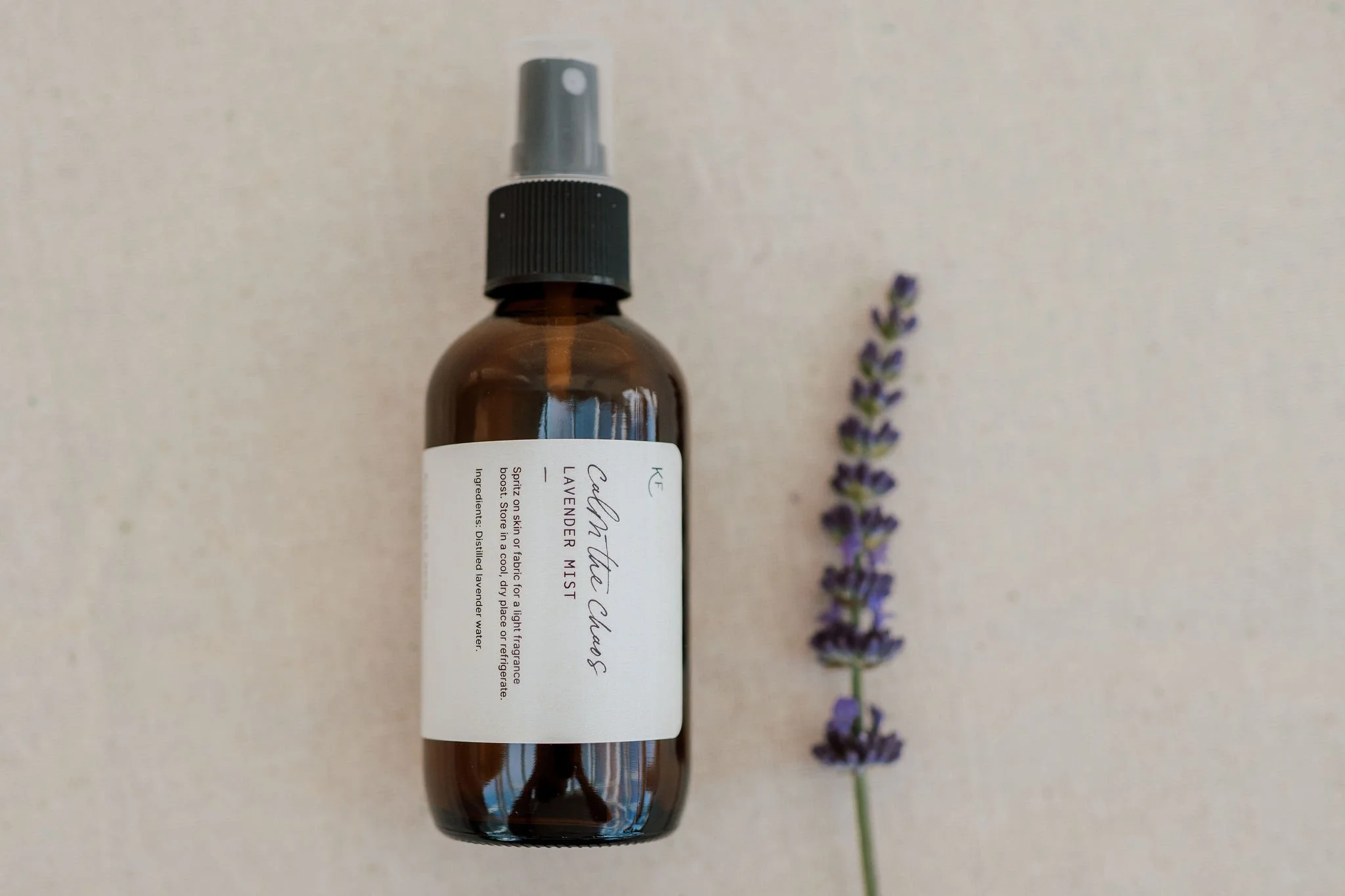
Lavender mist bottled from the farm’s hydrosol.
If you'd like to bring a little of that June field home, or send it to someone who deserves it, our lavender collection is waiting.
Related notes


— Christine
Killdeer Farms is a neighborhood flower farm at 4951 Jefferson Boulevard in West Sacramento. Learn more about us.

How to pick a bouquet that won't die tomorrow, and how to keep it happy once it's home.