

Growing flowers for the simple pleasure of enjoying them in your home is an experience I wish more people would try. You don't need acres, a greenhouse, or a complicated planting plan. You need a sunny patch, a handful of flowers suited to your climate, and a little patience to let the first season teach you what your garden wants to be.
I lived 36 years without a cutting garden, but I won't live another day without one. Having an abundance of flowers grown for the sole purpose of displaying in my kitchen has become one of life's great pleasures. The first blooms of early spring still make me feel like a kid on Christmas morning, and there's something wonderfully ordinary about filling the house with flowers you grew yourself.
Start with your space
Like the veggies in your garden, most cut flowers want at least six hours of sun. A raised bed works. A strip along a fence works. Containers can work, too. The best cutting garden is not the biggest one; it is the one close enough to the back door that you will actually water, cut and enjoy it.
I encourage anyone with an interest in flowers to try growing a few easy varieties at home, even if that just means a single pot on an apartment porch. You may fall in love with it! Or you may hate it, and that's cool, too, because plants are needy and fickle, and it's perfectly fine to purchase from your local farmer.
Plant on Sacramento's two calendars
The farming season begins in autumn, when Sacramento's air and soil temperatures cool. That's when we begin planting hardy varieties, the ones that can withstand a little frost. Flowers like snapdragons, ranunculus, sweet peas, bells of Ireland and sweet William are happiest if they can get their roots established in the fall, hang out during the winter, and bloom in early spring. On the flip side, heat lovers like basil, celosia, zinnias, and sunflowers won't germinate until the ground has warmed and the days are long, so they don't get planted until T-shirt weather arrives.
But why plant in fall at all?
Because for spring flowers, winter isn't the enemy. Heat is.
Many favorite flowers, like ranunculus and anemones, are cool-season flowers that prefer growing when temperatures are below 75 degrees. That can be tough in Sacramento, where spring is short and temperatures spike quickly. While a spring-planted seedling is still trying to establish itself, its fall-planted neighbor may already have a substantial root system and be preparing to bloom. For us, that can mean earlier flowers, stronger plants, and more time to enjoy them before Sacramento decides it is suddenly summer in April.
If you miss the fall window, you’ll get a second chance. In the Sacramento region, February is when we start thinking seriously about the season ahead. Around Valentine's Day I begin many of our cool-season flowers indoors, and there are even varieties, like snapdragons and lisitanthus, that can be transplanted into the garden.
Choose a few easy flowers
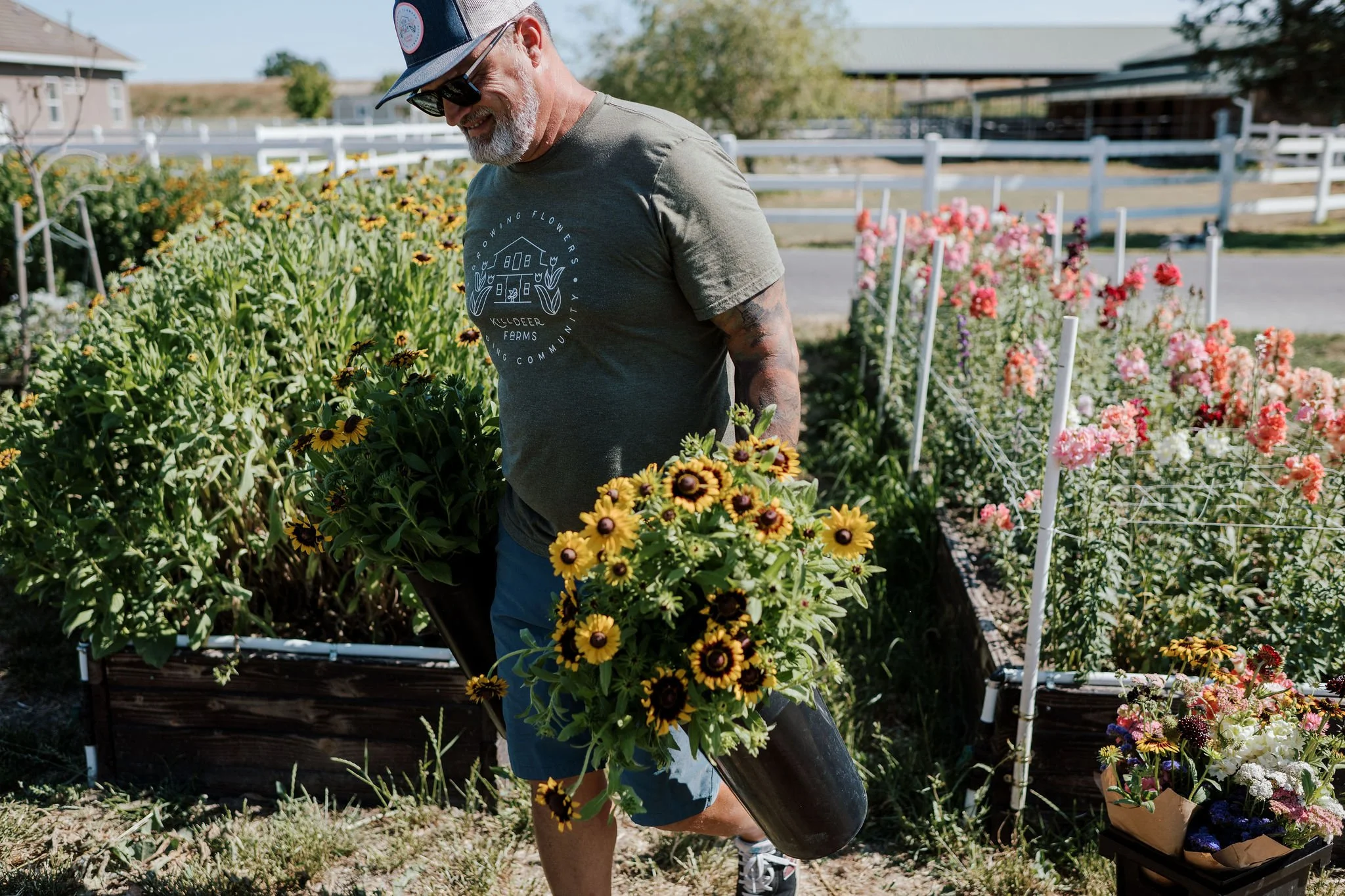
For beginners, I like flowers that reward you without demanding advanced gardening credentials. Snapdragons, stock, strawflower, bachelor buttons, dill, and campanula can be started in the cool season. Once temperatures warm, cosmos, sunflowers, zinnias, and celosia become much happier choices.
Expect to learn on the job
Did you know that in the farming world, you're considered a beginner for your first decade? That sounds dramatic, but it's also weirdly comforting. Because eight years in, we still feel like we’re learning on the job.
Every year brings a surprise you definitely did not order. Smoky summer. Winter floods. Caterpillar apocalypse.
So if you've already decided that you're a no-good gardener, I'd like to revoke that diagnosis. Most of the time, it's not that you're bad at growing things. It's that you're trying to solve a mystery with incomplete information.
Gardening is an exercise in optimism, forgiveness and selective memory. Some seedlings will disappear. Some will sulk. Some will become the flower you cannot believe you ever lived without. That is part of the fun.
Make a plan
If you'd like a place to map it all out, our Flower Garden Planner and Seasonal Planting Schedule are a printable workbook for choosing your flowers, designing your space, and determining what to put where when. You can download them here


How to pick a bouquet that won't die tomorrow, and how to keep it happy once it's home.